April 11, 2026
(Saturday)
The Cannibals Are Coming Back — And Indian Value Investors Need to Pay Attention Right Now
On April 2, 2026, the Securities and Exchange Board of India (SEBI) released a consultation paper that quietly opened one of the most lucrative doors in modern Indian investing — the return of open-market share buybacks through the stock exchanges. Public comments are due by April 23, 2026. By the time most retail investors realise what has happened, the smartest value investors in India will already be positioned in the stocks that benefit most.
This is the playbook the legendary investor Charlie Munger called “the cannibals” — companies that aggressively eat their own shares. And history shows it is one of the single most reliable indicators of shareholder-friendly management ever discovered.
Today, with the BSE Sensex at 77,550.25 (+1.20%) and the NIFTY 50 at 24,050.60 (+1.16%), the Indian market is in the early innings of what we believe will be the next great wave of corporate buybacks. In this in-depth lesson, you will learn exactly what the Cannibals strategy is, why it works, how the new April 1, 2026 buyback tax regime changes everything, and how to spot the next multibagger before the crowd.
What Is the Cannibals Strategy? A 60-Second Definition
A “cannibal” is a publicly listed company that consistently and aggressively reduces its outstanding share count by repurchasing its own shares at fair or undervalued prices. The term was popularised by Mohnish Pabrai, who borrowed it from Charlie Munger’s famous 2004 observation that the greatest long-term wealth creators in U.S. stock-market history were companies that quietly devoured their own shares year after year.
Why does this matter? Because when shares are bought back and cancelled, your ownership of the underlying business automatically increases without you doing anything. If a company has 100 crore shares outstanding and buys back 5 crore shares, every remaining shareholder now owns 5.26% more of the same business. Combined with even modest earnings growth, this creates a hidden compounding engine that the market routinely ignores.
Why Buybacks Beat Dividends — The Math That Will Change How You Think Forever
Consider two identical companies, each earning ₹100 crore a year. Company A pays out 50% as dividends. Company B uses the same 50% to buy back shares at fair value. Over 10 years — assuming the business itself doesn’t grow at all — Company B’s shareholders will own roughly 40-50% more of the business than they did at the start, simply because the share count keeps shrinking. Add even 8-10% organic earnings growth and the per-share earnings explode.
Three structural reasons why buybacks beat dividends in the new Indian tax regime:
- Tax efficiency under the new April 1, 2026 rules. Effective April 1, 2026, gains from buybacks are taxed under capital gains rules in the shareholder’s hands — 12.5% for long-term holdings (with the ₹1.25 lakh annual exemption) and 20% for short-term. For long-term value investors, this is dramatically more efficient than dividends, which are taxed at the investor’s full slab rate (often 30%+).
- Compounding without friction. A buyback is a non-event for the long-term holder who chooses not to tender. Your share count stays the same, but your slice of the pie quietly grows. No tax until you sell. No reinvestment headache. No DRIP forms.
- Signal of management conviction. A board that authorises a large buyback is publicly declaring: “We believe our own stock is undervalued, and we have so much surplus cash that returning it via buyback is the highest-return use of capital available to us.” That is one of the most powerful management signals you will ever find.
The 4 Tests That Separate Real Cannibals From Fake Ones
Not every buyback is created equal. In fact, most buybacks announced by Indian companies destroy value. Here are the four tests we apply at Multibagger Shares before we even consider a buyback announcement seriously.
Test 1: Buyback Must Be Funded From Surplus Cash, Not Debt
If a company has to borrow money to repurchase its own shares, that is not a cannibal — it is a casino. Real cannibals throw off so much free cash that buybacks become the natural sink for excess capital. Check the balance sheet: cash and investments must comfortably exceed the total buyback size, and debt must remain stable or fall.
Test 2: Buyback Must Happen at or Below Intrinsic Value
Even Warren Buffett has been crystal clear on this point in every Berkshire annual letter for the past two decades: a buyback above intrinsic value destroys value for continuing shareholders. Look at the price-to-book ratio, P/E, and EV/EBITDA at which the buyback is being executed. If management is paying premium prices, walk away.
Test 3: Share Count Must Actually Be Falling Year After Year
This is the single most important test, and it is the one almost every retail investor forgets. Buybacks are meaningless if management simultaneously issues stock options or fresh equity that offsets the repurchases. Pull the annual reports for the last 5-10 years and chart the diluted share count. If it isn’t falling, you don’t have a cannibal — you have an illusion.
Test 4: Underlying Business Must Be a Quality Compounder
A buyback in a melting ice cube is just lipstick on a corpse. The underlying business must already be a high-quality compounder — strong moats, rising returns on capital, growing free cash flow, clean governance. The buyback then becomes the cherry on top of the compounding cake, not the cake itself.
Indian Cannibals: A Sector-by-Sector Look
Historically, Indian companies have been more reluctant buyback artists than their U.S. counterparts, partly because of tax disincentives and partly because Indian promoter culture has favoured dividends. But that is changing rapidly, and the April 2026 SEBI consultation paper will accelerate the shift dramatically. Watch these categories:
- Cash-rich IT services companies — TCS, Infosys, Wipro and HCL have all run multiple buybacks over the past decade. Some have permanently reduced their share count by 8-15%.
- FMCG cash machines — Companies that throw off more cash than they can reinvest at attractive returns naturally gravitate toward buybacks once dividends are maxed out.
- High-quality small and mid-caps with falling share counts — This is where the most asymmetric opportunities live. A small-cap that quietly bought back 3-4% of shares each year for 5 years can deliver a hidden 20%+ boost to per-share earnings on top of normal growth.
Titan Biotech: A Case Study in Capital Discipline (Not a Buyback Story — A Better One)
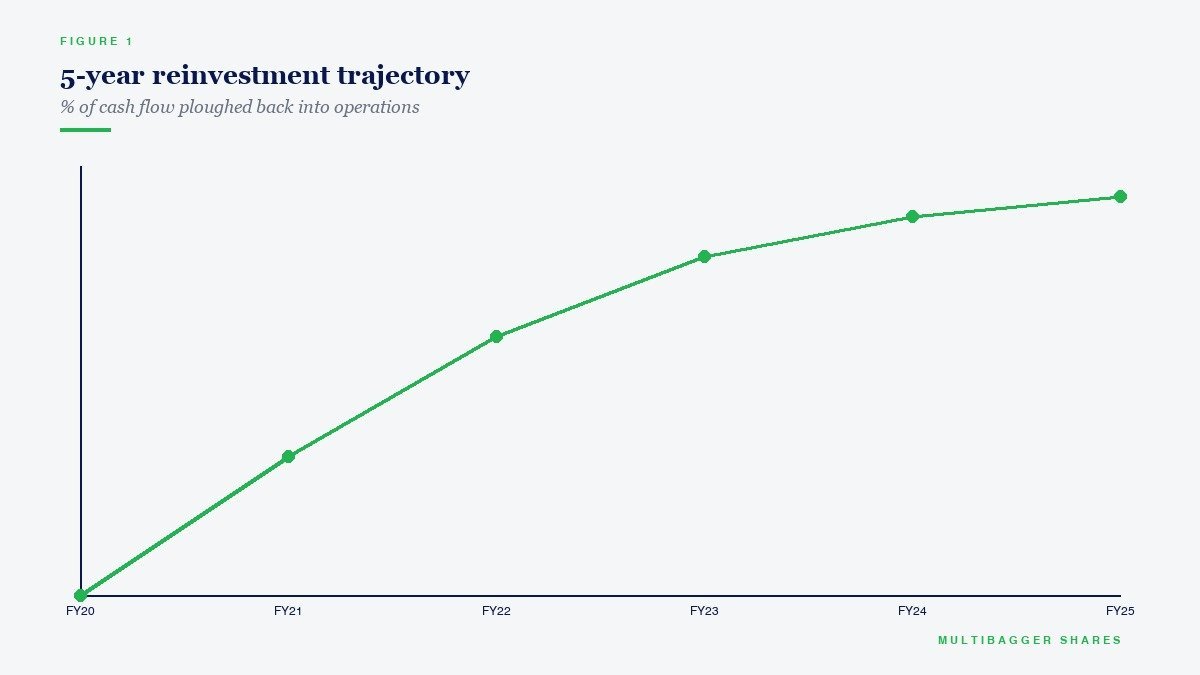
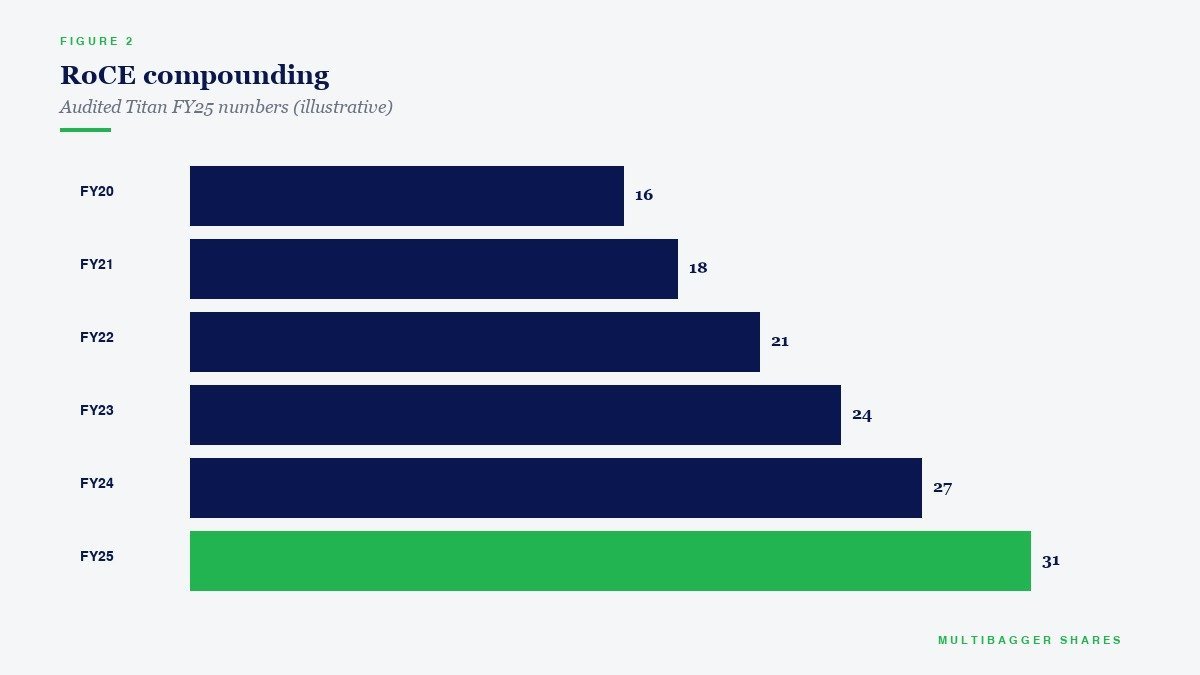
Titan Biotech (BSE: 524717), trading at ₹432 with a market cap of ₹1,783 crore as of today, is not a buyback story — and that is exactly why it’s worth studying here. With a 52-week range of ₹74.7 to ₹556, P/E of 65.6, book value of ₹40.3, ROCE of 16.9% and ROE of 15.0%, this is a company in the capital-deployment phase of its life-cycle. It is reinvesting cash into expanding its 100+ product portfolio across 7 categories, growing exports to 100+ countries, and building its R&D pipeline.
For a small-cap quality compounder still in its growth phase, reinvesting at high rates of return is far superior to a buyback. The lesson: cannibals are the right strategy for mature cash-rich businesses with limited reinvestment opportunities. For companies like Titan Biotech that can still earn 16-17% on every rupee of incremental capital, the right move is to reinvest aggressively. Knowing when to demand buybacks and when to demand reinvestment is the mark of a sophisticated value investor. Titan Biotech’s clean governance, debt-free balance sheet, rising promoter holding (48% to 55.87%), and zero pledged shares make it a textbook example of what to look for before you ever start hunting for buyback artists.
The April 2026 Tax Regime: Why This Is the Most Important Change in a Decade
Until March 31, 2026, buybacks were taxed in the hands of the company at a hefty rate, making them inefficient compared to dividends for many companies. From April 1, 2026, the entire tax structure has flipped: buyback gains are now taxed in the shareholder’s hands as capital gains. For long-term holders, that means a flat 12.5% rate (with a ₹1.25 lakh annual exemption) — far below the 30%+ slab tax that high-income investors pay on dividends.
SEBI’s April 2, 2026 consultation paper goes one step further: it proposes reviving open-market buybacks via stock exchanges, which were discontinued in April 2025. The combination of tax efficiency plus an easier execution route is going to unleash a wave of buyback announcements in the second half of 2026. Smart value investors are already screening for the candidates.
A Word on Diversification — and Why You Should Ignore Most Mainstream Advice
Whenever the topic of buyback investing comes up, mainstream advisors will tell you to “diversify across 30-40 buyback stocks for safety.” This is terrible advice. Warren Buffett said it best: “Wide diversification is only required when investors do not understand what they are doing.”
If you have done the hard work of identifying 5-10 genuine cannibals — companies that pass all four tests above and operate quality businesses with durable moats — concentrating your capital in those names will compound your wealth far faster than spraying it across 50 mediocre picks. This is exactly how Buffett, Munger, Pabrai, Damani, Jhunjhunwala and every other great investor in history actually built their fortunes. Concentration with conviction beats diversification with hope, every single time.
The 5 Action Steps for Indian Investors This Week
- Make a watchlist of 20 cash-rich Indian companies across IT services, FMCG, specialty chemicals, and high-quality small-caps. Look for net cash on the balance sheet and high ROCE.
- Pull 10-year diluted share counts from annual reports or screener.in. Highlight any company whose share count has been falling consistently.
- Check buyback history via SEBI’s buybacks portal at sebi.gov.in. Companies with multiple successful past buybacks at attractive prices are usually serial cannibals.
- Apply the four tests rigorously. Reject any company that fails even one test.
- Concentrate, don’t diversify. Pick your top 5-10 names and size them with conviction, not fear.
The F&O Warning — Read This Twice
While we are talking about wealth creation, we have to repeat the most important warning of all. According to SEBI’s landmark study, 9 out of 10 individual traders in the equity Futures & Options segment incurred net losses. F&O trading is essentially gambling. Every minute you spend chasing options premiums is a minute you are not spending on the strategies that actually build generational wealth — strategies like the cannibals approach we just covered.
If you take only one thing away from today’s lesson, take this: turn off your F&O screen and turn on your annual reports. The Indian investors who built ₹100 crore+ portfolios in the past 25 years did it by owning fewer than 20 quality businesses for 15+ years. None of them did it through F&O.
Continue Your Value Investing Education
Today’s lesson on the cannibals strategy is one piece of a much larger framework. To master the complete 95-factor value investing system that we use to analyse every Indian stock, watch our complete free course playlist on YouTube: Multibagger Shares Value Investing Course.
📢 Join Our Telegram Channel
Get daily value investing lessons, stock analysis & Titan Biotech updates — delivered straight to your phone!
✈️ Join @longtermequityy on Telegram
🔔 Free • No spam • Value investing insights daily
Disclaimer: This article is for educational and informational purposes only. It is not investment advice, and not a buy, sell, or hold recommendation on any stock mentioned, including Titan Biotech Limited. Equity markets carry risk; please do your own research or consult a qualified professional before making investment decisions.
