April 09, 2026
(Thursday)
The ₹1 Lakh Experiment That Reveals Your Biggest Investment Weakness
Imagine two scenarios. In the first, you check your portfolio and discover you’ve made ₹1 lakh in unrealized gains today. In the second, you check and find you’ve lost ₹1 lakh. Now, here’s the question that separates successful long-term investors from the crowd: which feeling is stronger — the joy of the gain or the pain of the loss?
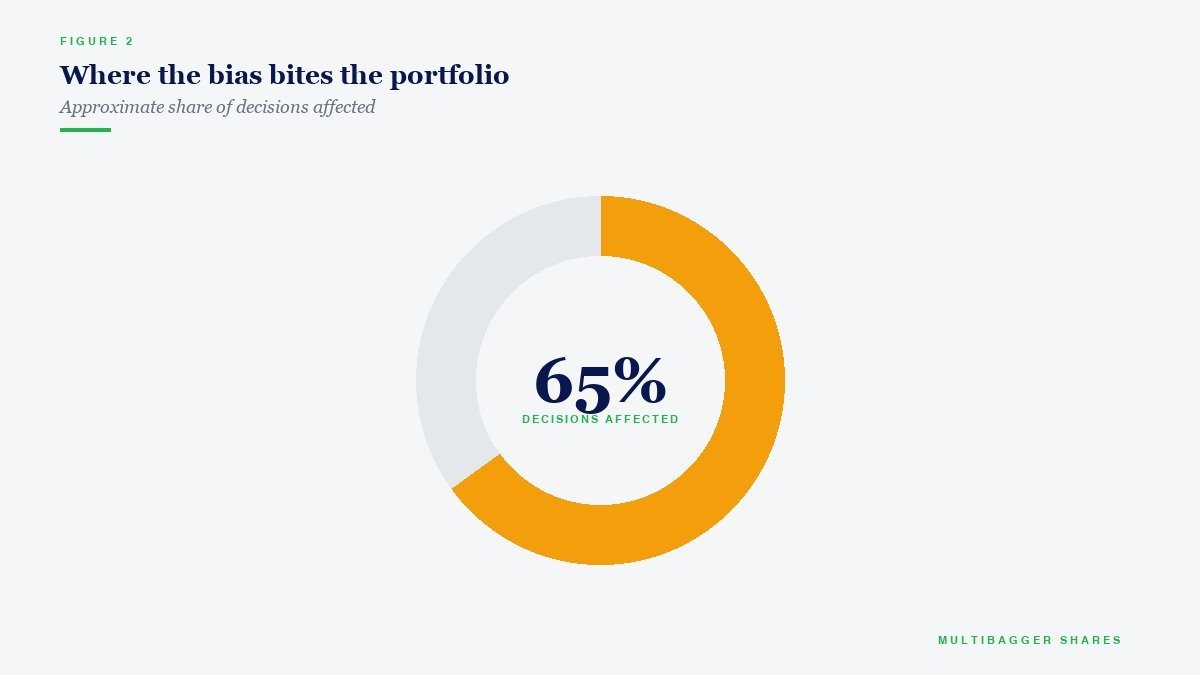
If you’re like the vast majority of human beings, the pain of losing ₹1 lakh feels approximately twice as intense as the pleasure of gaining ₹1 lakh. This isn’t a moral failing or a sign of weakness. It’s a deeply wired cognitive bias that Nobel Prize-winning psychologists Daniel Kahneman and Amos Tversky identified in their groundbreaking 1979 paper on Prospect Theory. They called it Loss Aversion — and it is, without exaggeration, responsible for more destroyed wealth in Indian stock markets than any market crash, scam, or regulatory shock combined.
Today, with the SENSEX at approximately 77,563 and the NIFTY 50 around 23,997 (after yesterday’s spectacular 3.95% rally on the back of the Iran-US ceasefire and RBI policy hold), many investors are sitting on both winners and losers in their portfolios. And right now, as you read this, loss aversion is silently guiding your decisions — making you cling to your losing positions and sell your winners far too early. Let’s break this bias apart, understand the science, and learn how to overcome it with the discipline of value investing.
What Exactly Is Loss Aversion? The Science Behind the Pain
Loss aversion is a principle from behavioral economics that states: the psychological pain of losing is roughly twice as powerful as the pleasure of an equivalent gain. In mathematical terms, if the utility of gaining ₹100 is +1, the disutility of losing ₹100 is approximately -2 to -2.5. This asymmetry has been confirmed across hundreds of experiments, cultures, and economic contexts since Kahneman and Tversky’s original research.
But why does this matter for investors? Because the stock market is a domain of constant fluctuation. If you buy a stock at ₹100 and it drops to ₹85, the pain you feel is far more intense than the pleasure you’d feel if it rose to ₹115. This asymmetry causes a cascade of irrational behaviors:
1. Selling Winners Too Early: When a stock rises 30%, the fear of “losing” those paper gains becomes overwhelming. You sell to “lock in profits” — and then watch the stock go on to become a 10-bagger. The gain felt fragile, temporary, something that could be taken away. Loss aversion made you treat unrealized gains as something you already “owned” and could “lose.”
2. Holding Losers Too Long: Conversely, when a stock drops 40%, selling would mean converting a paper loss into a real, crystallized loss. The pain of that realization is so severe that most investors prefer to hold — hoping, praying — for a recovery that may never come. They say “I’ll sell when it comes back to my buy price,” but that day never arrives for fundamentally broken businesses.
3. Avoiding Equities Altogether: Many Indians keep their wealth in fixed deposits, gold, and real estate — not because these are superior investments, but because they never show you a red number. The fear of seeing portfolio losses keeps crores of rupees locked in instruments that barely beat inflation. According to SEBI data, India’s equity participation rate is still under 5% of the population — loss aversion is a primary culprit.
The Indian Investor’s Loss Aversion Tax: Real Numbers
Let me show you what loss aversion actually costs with a real Indian market example. Consider an investor who bought shares of a quality company — let’s take Titan Biotech (BSE: 524717), currently trading at approximately ₹454 per share with a market capitalization of ₹1,877 crore. Titan Biotech is a debt-free, high-ROCE biotech company with consistent earnings growth, strong promoter holding of 55.87%, and zero pledged shares.
Now imagine two investors who both bought Titan Biotech at ₹200 (post-split adjusted price):
Investor A (Loss Averse): When the stock rose to ₹300 (a 50% gain), Investor A panicked at every minor 5% dip. “What if I lose my gains?” When it briefly corrected from ₹350 to ₹310, the pain of “losing” ₹40 per share felt unbearable. Investor A sold at ₹320, booking a 60% gain, and felt relieved. But the stock continued climbing to ₹454 — an additional 42% that Investor A completely missed. The total return left on the table: 127% vs. the 60% actually captured.
Investor B (Discipline Over Emotion): Investor B recognized that short-term fluctuations are noise. With a business showing 28.6% EPS CAGR, 16.9% ROCE, expanding margins, and management increasing its own stake, the fundamental thesis remained intact. Investor B held through every dip and still holds today — sitting on a 127% gain with the business continuing to compound value.
The difference between these two investors isn’t intelligence, education, or access to information. It’s the ability to recognize and override loss aversion.
Kahneman’s Prospect Theory: The Mathematical Proof
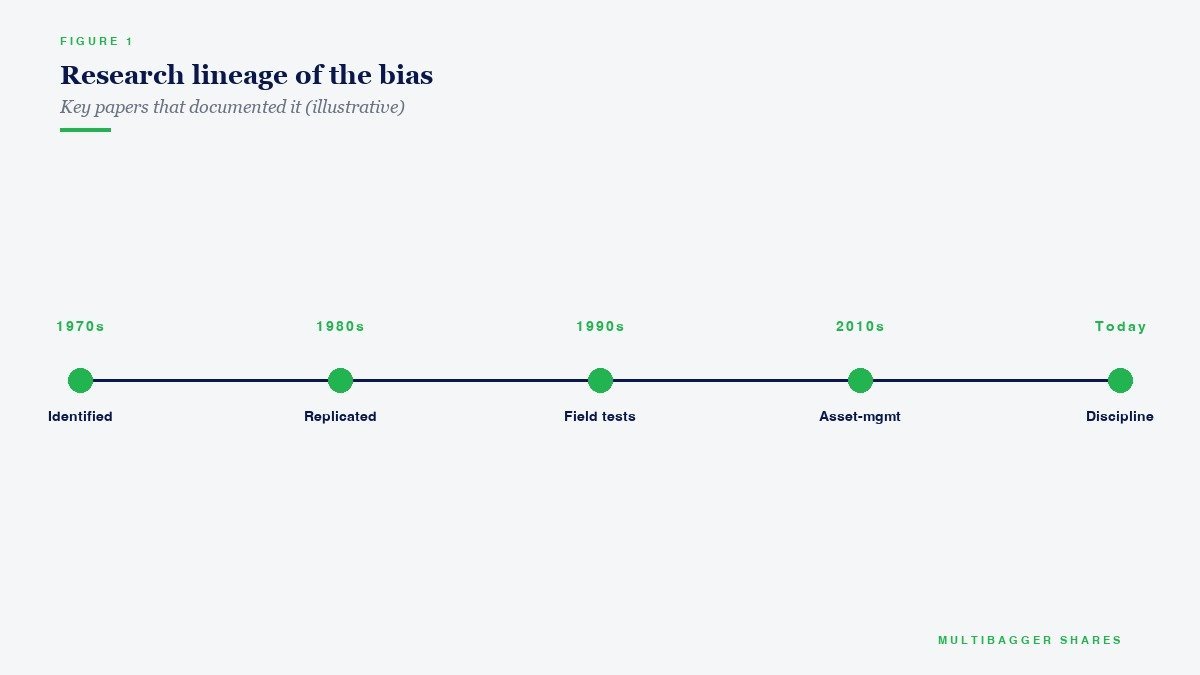
Daniel Kahneman and Amos Tversky’s Prospect Theory, published in Econometrica in 1979, is one of the most important papers in the history of economics. It showed that humans don’t evaluate outcomes in absolute terms — they evaluate them relative to a reference point (usually their purchase price). The value function has three critical properties:
1. Reference Dependence: You don’t think “my stock is worth ₹454.” You think “my stock is up ₹254 from where I bought it” or “down ₹46 from its 52-week high of ₹556.” Your reference point — usually your buy price — determines whether you feel gain or loss.
2. Diminishing Sensitivity: The difference between gaining ₹10,000 and ₹20,000 feels larger than the difference between gaining ₹1,00,000 and ₹1,10,000 — even though both are ₹10,000 differences. This is why early gains feel exciting but later gains feel “meh,” leading to premature selling.
3. Loss Aversion (The Steep Curve): The value function is steeper for losses than for gains. A ₹50,000 loss hurts more than a ₹50,000 gain pleases. The loss aversion coefficient (λ) is typically estimated at 2.0 to 2.5, meaning losses loom roughly twice as large as gains.
Five Ways Loss Aversion Destroys Wealth in Indian Markets
Trap #1 — The “Break-Even” Obsession: An investor buys a stock at ₹500. It falls to ₹300. Instead of asking “Is this business worth ₹300 today? Would I buy it at this price?”, the investor fixates on ₹500 — the reference point. “I’ll sell when it comes back to ₹500.” This is pure loss aversion. The ₹500 buy price is irrelevant to the stock’s future value. Warren Buffett has said it best: “The stock doesn’t know you own it.” Your buy price has zero impact on the company’s intrinsic value.
Trap #2 — The Premature Profit Booking: This is perhaps the most expensive manifestation of loss aversion for Indian retail investors. You buy a quality stock at ₹100. It goes to ₹200. You’ve doubled your money! But now every 5% correction feels like you’re “losing” ₹10 per share. The fear of giving back gains overwhelms you, and you sell at ₹200. Five years later, the stock is at ₹1,000. You captured 100% instead of 900%. As the legendary investor Peter Lynch documented, most of his best returns came from stocks he held for 5-10+ years. The big money is not in the buying or selling, but in the waiting.
Trap #3 — Portfolio Checking Addiction: Studies by Shlomo Benartzi and Richard Thaler showed that investors who check their portfolios daily are far more loss-averse than those who check quarterly or annually. Why? Because on any given day, the probability of seeing a loss is nearly 50% (markets are roughly random in the short term). But over a year, the probability of seeing a gain in a quality portfolio is much higher. Each time you see red on your screen, loss aversion triggers a stress response. The more frequently you check, the more pain you experience, and the more likely you are to make impulsive sell decisions. The cure is simple: check your portfolio less often.
Trap #4 — Averaging Down on Losers (The Wrong Kind): Loss aversion makes the idea of selling a loser unbearable. Instead, investors “average down” — buying more of a losing stock to reduce their average cost. If the stock dropped because of fundamental deterioration (declining margins, rising debt, management issues), averaging down is simply throwing good money after bad. The correct question is never “what’s my average cost?” but always “If I didn’t already own this stock, would I buy it today at this price?”
Trap #5 — The F&O Gambling Trap: Here’s a connection most people miss. Loss aversion actually drives many retail investors toward Futures & Options (F&O) trading. After suffering losses in stocks, the pain is so intense that investors seek “quick recovery” through leveraged F&O trades. They’re trying to erase the loss fast. But SEBI’s own study reveals the devastating truth: 9 out of 10 individual traders in the equity F&O segment incurred net losses. Loss aversion creates losses, which creates more loss aversion, which drives riskier behavior, which creates bigger losses — a vicious cycle that has destroyed the savings of millions of Indian families.
How to Beat Loss Aversion: The Value Investor’s Toolkit
The good news is that loss aversion, once understood, can be managed. Here are battle-tested strategies used by the world’s greatest investors:
Strategy #1 — Think in Terms of Intrinsic Value, Not Price: When you anchor your analysis to a company’s intrinsic value — based on earnings power, cash flows, competitive position, and management quality — price fluctuations become irrelevant noise. If you’ve determined that a business is worth ₹600 per share and it’s trading at ₹454, a dip to ₹400 is an opportunity, not a loss. As Warren Buffett says: “Wide diversification is only required when investors do not understand what they are doing.” When you deeply understand a business through rigorous research (like our 95-factor analysis framework), you have the conviction to hold through volatility. Concentrate your portfolio in your 5-10 best ideas, understand them deeply, and let compounding work.
Strategy #2 — Pre-Commit to Holding Periods: Before you buy a stock, write down your investment thesis and your intended holding period. “I am buying this company because [reasons]. I intend to hold for at least 3-5 years. I will only sell if [specific fundamental conditions deteriorate].” This pre-commitment device removes loss aversion from the equation. When the stock drops 15% and your amygdala screams “SELL!”, you can refer to your written thesis and ask: “Has anything in my thesis changed?” If not, you hold. End of discussion.
Strategy #3 — The “Would I Buy It Today?” Test: This is the single most powerful anti-loss-aversion tool. Every time you feel the urge to sell — whether to lock in gains or to avoid further losses — ask yourself: “If I didn’t own this stock and had the same amount of cash, would I buy it today at this price?” If yes, hold. If no, sell — regardless of whether you’re at a gain or a loss. This question forces you to evaluate the stock on its current merits, not relative to your emotionally charged reference point.
Strategy #4 — Reduce Portfolio Monitoring Frequency: Benartzi and Thaler’s concept of “myopic loss aversion” showed that the combination of loss aversion + frequent evaluation = terrible investment decisions. If you check your portfolio every hour, you’ll see losses roughly half the time, and each one will trigger disproportionate pain. Switch to checking monthly or quarterly. The great investor and master compounder approach is to plant seeds in quality businesses and let them grow — you don’t dig up a seed every day to check if it’s growing.
Strategy #5 — Study the Great Compounders: Look at the long-term wealth creation charts of India’s finest businesses. Titan Biotech, with its consistent ROCE of 16.9%, zero debt (D/E ratio of just 0.02x), promoter holding increasing from 48% to 55.87%, and 28.6% EPS CAGR over a decade, is a textbook example of a quality compounder. Every single correction along the way — every 10%, 20%, even 30% drawdown — was a temporary dip within a long-term wealth creation trajectory. The investors who sold during those dips were victims of loss aversion. The investors who held (or bought more) were rewarded handsomely.
The Buffett-Munger Solution: Process Over Emotion
Warren Buffett and Charlie Munger built Berkshire Hathaway into a trillion-dollar enterprise not by being immune to loss aversion — they’re human too — but by building systems and processes that override emotional biases. Buffett has famously said: “The stock market is a device for transferring money from the impatient to the patient.” Loss aversion makes you impatient. Value investing discipline makes you patient.
The greatest Indian investors — Rakesh Jhunjhunwala, Radhakishan Damani, Vijay Kedia — all share one trait: they held their best positions through enormous drawdowns. Jhunjhunwala held Titan Company through multiple 30-40% corrections on his way to earning over ₹10,000 crore from that single position. His loss aversion didn’t disappear — he just had a system for overriding it.
If you want to build a concentrated portfolio of 5-10 deeply researched, high-conviction multibagger stocks — which is what every serious value investor should aim for — you must develop the emotional discipline to sit with paper losses. The alternative — wide diversification across 50 stocks — is what people do when they don’t understand their holdings well enough to tolerate volatility.
Your Action Plan: Defeating Loss Aversion Starting Today
1. Audit your portfolio tonight. Identify any stock you’re holding solely because selling would “lock in a loss.” Ask the “Would I buy it today?” question for each one. Be brutally honest.
2. Identify any stock you sold too early. Look at your transaction history. Find stocks you sold at modest gains that went on to deliver much larger returns. This exercise makes loss aversion visible and personal — you can see exactly how much it cost you.
3. Write investment theses for your top 5 holdings. Include the specific conditions under which you would sell. Pin it somewhere visible. Next time fear strikes, read your thesis before touching the sell button.
4. Reduce your portfolio checking frequency. If you check daily, switch to weekly. If weekly, switch to monthly. Your future self will thank you.
5. Study quality businesses deeply. The more deeply you understand a company’s fundamentals — its ROCE, its cash flows, its competitive moats, its management quality — the easier it becomes to hold through volatility. Our free Value Investing Masterclass covers this in depth: Watch the complete course here.
Remember: the market doesn’t reward the most intelligent investors. It rewards the most disciplined ones. And discipline, in the face of loss aversion, is the ultimate edge.
Stay patient. Stay invested. Stay focused on quality.
📢 Join Our Telegram Channel
Get daily value investing lessons, stock analysis & Titan Biotech updates — delivered straight to your phone!
✈️ Join @longtermequityy on Telegram
🔔 Free • No spam • Value investing insights daily
Disclaimer: This article is for educational and informational purposes only. It is not investment advice, and not a buy, sell, or hold recommendation on any stock mentioned, including Titan Biotech Limited. Equity markets carry risk; please do your own research or consult a qualified professional before making investment decisions.
