Published: April 15, 2026 | By Manish Goel | Value Investing Course — Episode 8
Hindi Version: Watch Episode 8 in Hindi →
Profit is an Opinion. Cash Flow is a Fact.
Read that again: Profit is an opinion. Cash flow is a fact.
This is perhaps the most important statement in all of fundamental analysis. While a company’s profit and loss statement is built on accounting estimates, judgments, and rules that can be legally — and sometimes illegally — manipulated, cash flow is the cold, hard reality of money actually moving in and out of a business. This is why the Cash Flow Statement is arguably the most important of the three financial statements for a value investor.
In Episode 8 of the Value Investing Course by , Manish Goel teaches you how to read and interpret the Cash Flow Statement the way professional investors do — as a forensic tool to verify whether a business’s reported profits are real, sustainable, and translating into actual wealth creation.
The Three Sections of the Cash Flow Statement
Section 1: Operating Cash Flow (OCF)
This is the cash generated by the company’s core business activities. It is the most critical section of the entire statement. Think of it this way: if a business were a cow, Operating Cash Flow is the milk it produces every day. This is the real, tangible output of the business. A business that consistently generates strong OCF is one you can trust. A business with perpetually weak or negative OCF despite reporting profits is one to be deeply suspicious of.
Section 2: Investing Cash Flow (ICF)
This section shows cash spent on acquiring assets (property, plant and equipment), making investments in other companies, or proceeds from selling assets. Capital Expenditure (Capex) lives here. A growing, healthy business typically shows negative investing cash flows — it is investing in its future. The key question is whether these investments generate adequate returns.
Section 3: Financing Cash Flow (CFF)
This tracks all cash flows related to the company’s financing activities — new borrowings, debt repayments, dividend payments, and equity issuances. A business consistently repaying debt from internally generated cash is self-funding its growth, which is a sign of exceptional quality.
Test 1: The OCF vs. PAT Ratio — The Single Most Powerful Test in Fundamental Analysis
Calculate the ratio of Operating Cash Flow to Profit After Tax (PAT) over 5 years. This is the most revealing single test you can apply to any Indian stock.
What the ratio tells you:
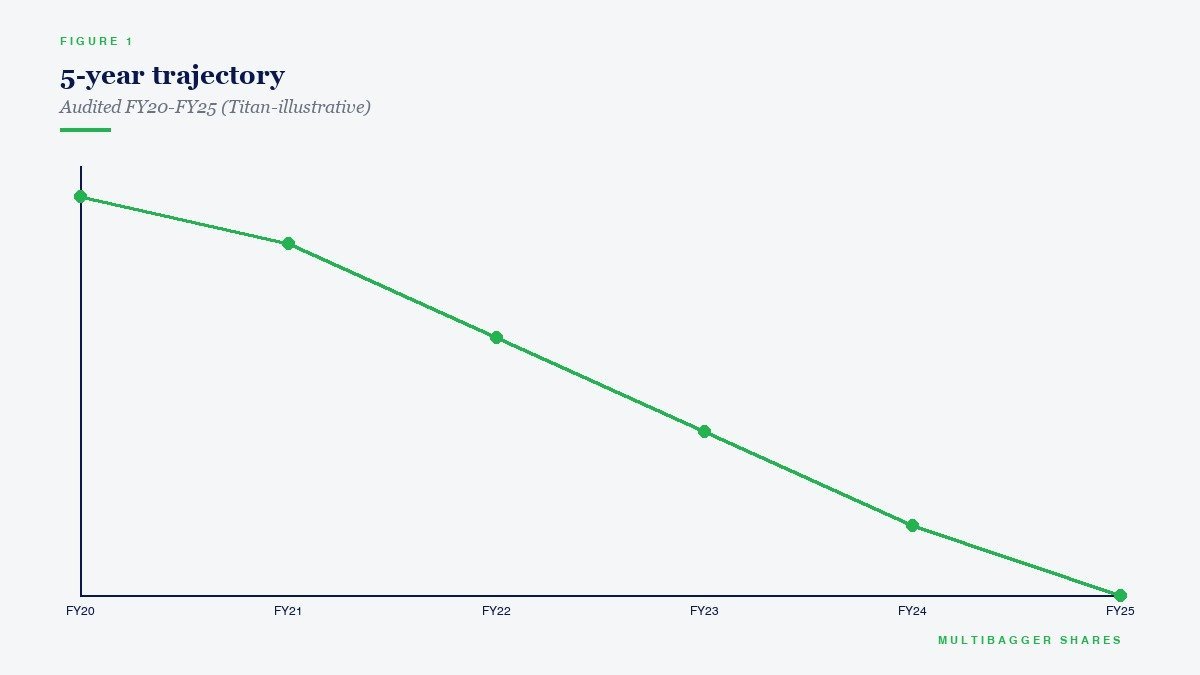
- Ratio consistently above 1.0 → The company generates MORE cash than it reports as profit. This is exceptional quality. Companies like HDFC Bank, Bajaj Finance, and Pidilite Industries have historically shown OCF/PAT ratios consistently above 1.0. This suggests conservative accounting and genuine cash generation.
- Ratio between 0.7 and 1.0 → Acceptable, watch closely for trends.
- Ratio below 0.5 over multiple years → MAJOR RED FLAG. The company may be recognizing revenue aggressively, building receivables that will never be collected, or in extreme cases, committing fraud.
Test 2: Free Cash Flow — The Ultimate Measure of Shareholder Value Creation
Free Cash Flow (FCF) = Operating Cash Flow − Capital Expenditure
FCF represents the actual cash available to shareholders after maintaining and growing the business. This is the money that can be used to pay dividends, buy back shares, reduce debt, or reinvest in new opportunities. Strong, consistent FCF generation is the hallmark of the world’s greatest wealth-creating businesses.
Consider Hindustan Unilever. For decades, HUL has consistently generated FCF margins of 15% or above. The business requires minimal capital investment to maintain its existing earning power — it has strong brands, an established distribution network, and relatively modest fixed asset requirements. Every year, it generates enormous amounts of free cash that it can return to shareholders or invest in growth. This is why HUL has been one of India’s greatest wealth creators.
Now compare this to a commodity steel company. Steel companies require continuous billions in capital expenditure just to maintain their plants and equipment. Much of their reported profit is consumed by the ongoing need to reinvest in the business just to stay competitive. Their OCF might look decent, but after accounting for capex requirements, their FCF generation is often poor or negative.
This difference — between capital-light, high-FCF businesses and capital-heavy, low-FCF businesses — shows up dramatically in long-term investor returns.
Test 3: Capex Intensity Analysis
Look at Capex as a percentage of Revenue and EBITDA over 5-10 years. Capital-light businesses — those maintaining Capex below 15% of EBITDA — are typically far superior wealth creators than capital-intensive ones.
Warren Buffett has repeatedly described his ideal business as one that can grow without needing significant ongoing capital investment — what he calls an “economic castle” surrounded by an impenetrable moat. Asian Paints is a classic example. Their capex relative to earnings is modest, yet they have maintained dominant market share and pricing power for decades.
Test 4: Working Capital Analysis from Cash Flow
Changes in working capital — the changes in receivables, inventory, and payables — appear within the operating cash flow section. These changes are crucial forensic indicators:
- Receivables rising faster than revenue → Customers aren’t paying, or revenue is being booked before cash is received. This can indicate channel stuffing or fake revenue.
- Inventory piling up → Demand may be weaker than reported. Products are being manufactured but not sold.
- Payables rising sharply → The company may be struggling to pay suppliers, which creates operational risk.
The Manpasand Beverages Disaster: Manpasand Beverages appeared to have acceptable P&L results. Revenue was growing, and profits looked reasonable. But a careful examination of the Cash Flow Statement revealed that receivables were ballooning — customers weren’t paying, or revenues were being fraudulently recognized. The operating cash flow was a fraction of reported profits. Investors who followed the cash avoided one of India’s biggest accounting frauds. The stock eventually collapsed to near zero.
Test 5: Debt Dynamics
In the Financing Cash Flow section, track whether the company is a net borrower or net repayer over time. A business that consistently repays debt from internally generated cash is a self-funding growth machine. This is the ideal scenario.
More importantly, look for companies where Free Cash Flow exceeds interest payments multiple times over. This indicates that debt is being managed comfortably, not desperately. Debt-free or rapidly deleveraging companies with strong FCF generation are among the safest and most powerful wealth creators in India’s stock market.
Disaster Case Studies: When P&L Looked Good but Cash Flow Didn’t
Jet Airways: For years before its collapse, Jet Airways reported operating results that looked adequate on the P&L. But their operating cash flows were consistently negative or minimal even during profitable years. The business was hemorrhaging cash, borrowing furiously to survive, and the Financing Cash Flow section showed the unsustainable debt accumulation. The collapse was visible to any investor who looked beyond the P&L.
DHFL: DHFL’s financing cash flows showed massive new borrowings year after year. Yet operating cash flows couldn’t adequately service the debt burden. The NPA situation and eventual collapse were foreshadowed clearly in the cash flow statements for those who knew where to look.
Eicher Motors — The Positive Case: Eicher Motors, maker of Royal Enfield motorcycles, generated extraordinary free cash flows relative to its size throughout its transformative growth period. The company’s FCF grew in line with (and often exceeded) reported profits — a clear sign of accounting integrity and genuine business quality. This gave long-term investors the confidence to hold through market volatility. Eicher delivered 100x returns to those who stayed the course.
The Concentrated Portfolio Approach to Cash Flow Investing
At , cash flow analysis is one of the core pillars of Manish Goel’s 95-factor stock screening framework. A company that cannot convert its reported profits into real cash is not a business worth owning — regardless of how attractive the P&L looks.
Warren Buffett put it best: “Wide diversification is only required when investors do not understand what they are doing.” When you apply rigorous cash flow analysis to deeply understand 5-10 businesses — verifying that their profits are real, their growth is capital-efficient, and their management is honest — you can concentrate your capital in those high-conviction ideas with confidence. That is how the world’s greatest investors built their fortunes.
Key Metrics to Track from the Cash Flow Statement
- OCF/PAT Ratio: Above 1.0 consistently = excellent; below 0.5 over multiple years = red flag
- Free Cash Flow Yield (FCF/Market Cap): Above 3-4% for a quality business is attractive
- FCF Margin (FCF/Revenue): Above 10-15% indicates a capital-light, high-quality business
- Debt Repayment Track Record: Are borrowings declining year-over-year from internal cash generation?
- Cash Conversion Cycle trends: A shortening cycle means faster cash generation and better business quality
📲 Join Our Telegram Community
Get daily value investing insights, stock analysis, and course updates from Manish Goel.
Next Episode: Episode 9 — Financial Ratios: The Comparison Toolkit
Previous Episode: Episode 7 — Understanding the P&L Statement
Value Investing Course by | Manish Goel | Free 30-Episode Series for Indian Investors
Disclaimer: This article is for educational and informational purposes only. It is not investment advice, and not a buy, sell, or hold recommendation on any stock mentioned, including Titan Biotech Limited. Equity markets carry risk; please do your own research or consult a qualified professional before making investment decisions.
