Trump Tariffs and RBI Rate Hold — Why Smart Investors Are Not Panicking in April 2026
Trump tariffs impact on Indian stock market 2026 — this is the question millions of Indian investors are searching right now. With US tariffs on Indian imports at 26%, the RBI holding repo rate steady at 5.25%, and Sensex swinging 1,500 points in a single week, retail investors are confused, scared, and making emotional decisions. But here is what separates wealthy investors from the crowd: they see opportunity where others see chaos. In this article by Manish Goel at , we break down exactly what is happening, which sectors are affected, and what you should actually do with your money right now.
What Exactly Are Trump Tariffs and Why Should Indian Investors Care?
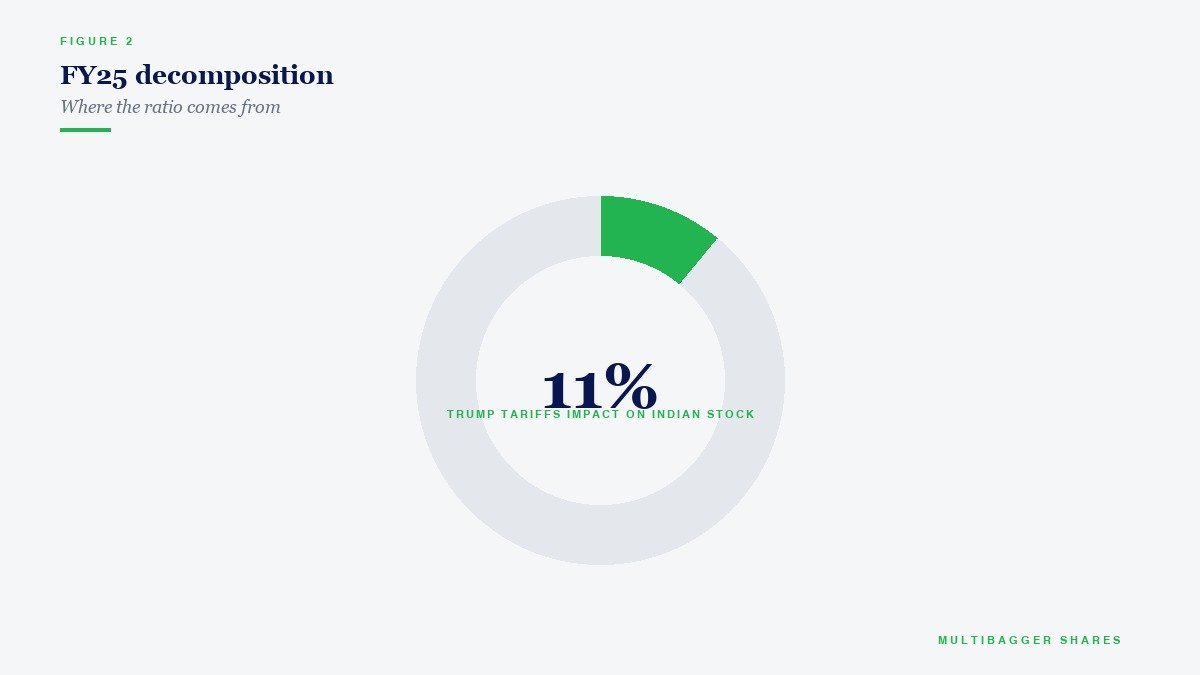
In early 2026, the United States imposed a 26% reciprocal tariff on Indian imports, later negotiated down to 18% after a landmark India-US trade deal in February 2026. While the headline number sounds alarming, the real impact depends entirely on which sectors you are invested in. Sectors with heavy US export exposure — like pharma, gems and jewellery, textiles, and auto components — face direct margin pressure. Over 30% of India’s exports in these categories go to the US market. However, companies focused on domestic consumption, infrastructure, and niche manufacturing remain largely insulated. This is precisely why blindly investing in index funds or widely diversified portfolios fails you during such events — you end up holding the losers along with the winners. The smart approach? Deep research into individual businesses.
RBI Holds Repo Rate at 5.25% — What This Means for Your Portfolio
On April 8, 2026, the Reserve Bank of India maintained the repo rate at 5.25% with a neutral stance. Many investors were hoping for a rate cut, but with Brent crude above $100 per barrel and the rupee weakened past 94 against the dollar, the RBI chose caution. For stock market investors, a rate hold means borrowing costs stay elevated. Real estate, auto, and banking stocks — which rally hardest on rate cuts — may consolidate in the short term. But here is the critical insight most market commentators miss: the best time to buy quality businesses is when sentiment is uncertain, not when everything is rosy and prices are already high.
FII Selling vs DII Buying — The Real Story Behind Market Moves
Foreign Institutional Investors (FIIs) sold a massive ₹8,167 crore in a single session last week, continuing their months-long selling spree driven by global risk-off sentiment, a strong US dollar, and geopolitical fears. But here is what the media does not tell you — Domestic Institutional Investors (DIIs) bought ₹8,088 crore in the same session, almost perfectly absorbing the FII selling. Indian mutual funds, insurance companies, and pension funds are increasingly confident about India’s domestic growth story. When foreign money leaves and domestic money stays, it creates a unique window of opportunity for informed individual investors. The stocks that FIIs dump in panic are often the very ones that create multi-year wealth for patient investors.
Which Sectors Are Safe During the Tariff Storm?
Not all sectors are created equal during a tariff war. Here is a sector-by-sector breakdown:
IT Sector (Resilient): Companies like Wipro (+3.77%), HCL Tech (+2.73%), TCS (+2.67%), and Infosys (+2.55%) posted strong gains even during the crash week. IT services are largely exempt from goods tariffs and benefit from a weaker rupee.
Metals and Realty (Recovering): Metals gained +1.55% and Realty +1.70% as domestic demand and infrastructure spending remain strong regardless of US tariff policy.
Pharma (Mixed): Large pharma exporters to the US face margin compression, but domestic-focused pharma and specialty chemical companies could actually benefit as supply chains reorganize.
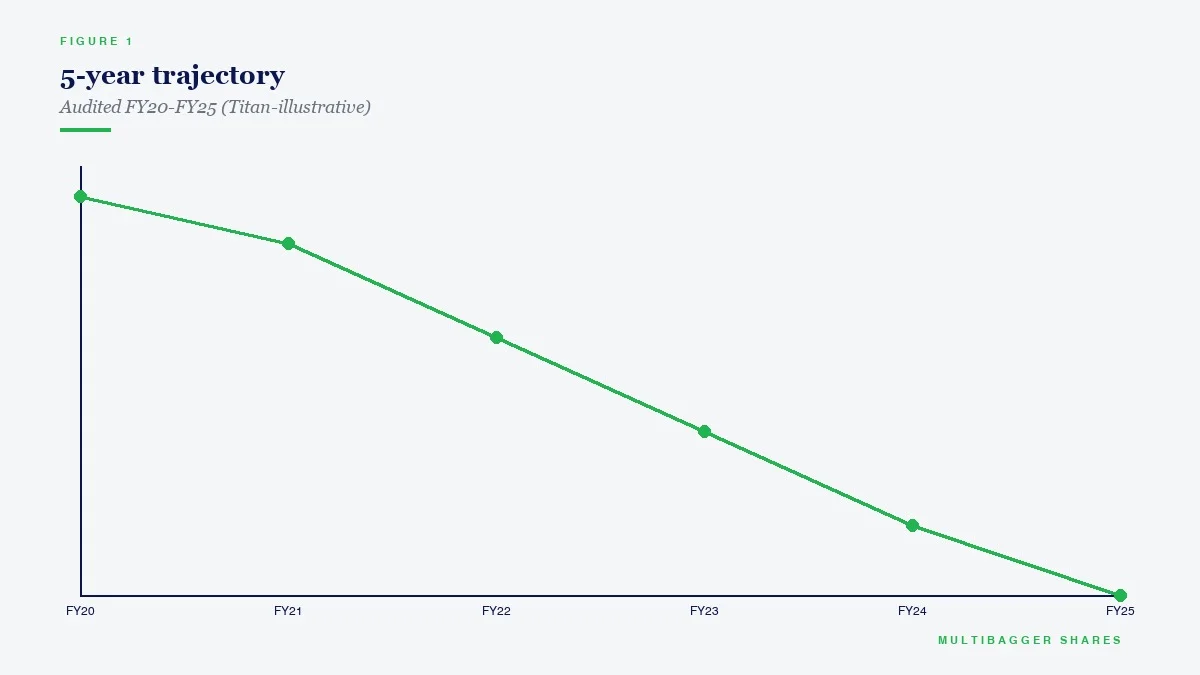
Niche Manufacturing and Biotech (Hidden Opportunity): This is where the real opportunity lies. Small and mid-cap companies focused on niche products with growing domestic and export demand are often completely overlooked during tariff panic. Consider the case of Titan Biotech Ltd — while the broader market crashed and recovered repeatedly over the past year, this company delivered extraordinary results. Titan Biotech’s share price surged over 326% in one year, moving from a 52-week low of ₹74.73 to highs near ₹400. Their net profit jumped 94.31% year-on-year in Q3 FY2025-26, with sales rising 47.62% to ₹56.51 crore. The market cap increased over 431% in just one year. These are not speculative numbers — they reflect genuine business growth in a niche biotech space. This is the power of deep research and conviction-based investing.
Why Most Investors Lose Money During Volatile Markets (And How You Can Be Different)
SEBI data consistently shows that approximately 90% of F&O traders lose money. During volatile markets like this April 2026 correction, F&O losses accelerate because leverage amplifies both fear and bad decisions. Instead of gambling in F&O trying to “time the tariff impact,” consider what the greatest investors in history actually do during uncertain times — they buy quality businesses at discounted prices.
As Warren Buffett famously said: “Wide diversification is only required when investors do not understand what they are doing.” The wealthiest investors — Buffett, Charlie Munger, Mohnish Pabrai, Rakesh Jhunjhunwala — built their fortunes not by spreading money across 50 stocks and hoping for the best, but by deeply understanding 5-10 exceptional businesses and investing with conviction. When you truly understand a company’s fundamentals — its revenue drivers, competitive moats, management quality, and growth trajectory — you do not panic when Trump announces tariffs or when FIIs sell. You see the dip as a gift.
The Real Risk Is Not Market Volatility — It Is Ignorance
Wide diversification feels safe, but it actually dilutes your returns and gives you a false sense of security. Owning 30 stocks across every sector means you own businesses you have never researched, in industries you do not understand, with management teams you have never evaluated. When a tariff shock hits, you have no idea which of your 30 holdings will be devastated and which will thrive. Concentrated portfolios built on deep research — what we teach through our 95-factor analysis framework at — give you the clarity to act decisively during market chaos instead of freezing in fear.
What Should You Do Right Now? A 5-Step Action Plan
Step 1: Stop watching CNBC every 5 minutes. Daily market noise causes emotional decisions. Weekly or monthly review is sufficient for long-term investors.
Step 2: Review your portfolio for US export exposure. If you hold pharma or textile companies with heavy US revenue, evaluate whether their moat is strong enough to absorb tariff pressure.
Step 3: Build a watchlist of quality businesses trading at fair prices. Market corrections create buying opportunities in fundamentally strong companies. Use proven frameworks — not tips from WhatsApp groups.
Step 4: Absolutely avoid F&O trading during volatility. SEBI data shows 90% of F&O traders lose money even in normal markets. During tariff-driven swings, the losses are catastrophic. Protect your capital.
Step 5: Invest in your own education. Learn to analyze businesses yourself using our free course playlist: Complete Stock Market Education by Manish Goel.
The Bigger Picture: India’s Domestic Story Remains Intact
Despite tariff headlines, India’s fundamental growth drivers have not changed. Government infrastructure spending continues at record levels. The manufacturing push under Make in India is accelerating. Domestic consumption demand from 1.4 billion people remains robust. Companies focused on serving this massive domestic market — especially in sectors like specialty chemicals, biotech, food processing, and digital infrastructure — will continue to grow regardless of what happens in Washington. The April 2026 correction is temporary. The wealth-building opportunity it creates for patient, informed investors is permanent.
Manish Goel is the founder of , dedicated to helping Indian investors identify high-quality multibagger stocks through deep fundamental research. Follow for more insights on value investing and wealth building.
Disclaimer: This article is for educational purposes only. Please do your own research before making any investment decisions. Stock market investments are subject to market risks.
Related Reading on :
- Titan Biotech: A Multibagger in the Making
- How to Find Multibagger Stocks Using Our 95-Factor Framework
- Why F&O Trading Is Gambling — And What to Do Instead
Disclaimer: This article is for educational and informational purposes only. It is not investment advice, and not a buy, sell, or hold recommendation on any stock mentioned, including Titan Biotech Limited. Equity markets carry risk; please do your own research or consult a qualified professional before making investment decisions.
