April 16, 2026
(Thursday)
Every Indian investor faces the same dilemma: pure value stocks look cheap but are often cheap for a reason, while pure growth stocks look expensive and require flawless execution to justify their prices. GARP investing — Growth at a Reasonable Price — elegantly resolves this dilemma. It is the strategy that the most successful fund managers and institutional investors use to build wealth consistently over decades, and today we break it down completely for the Indian market context.
As of April 16, 2026, the NIFTY 50 is trading at 24,329 (+0.40%) and the SENSEX at 78,353 (+0.31%) — markets are gradually recovering from recent volatility. In such an environment, identifying high-quality compounders at reasonable prices is not just smart strategy, it is essential survival skill. This is exactly where GARP delivers its most powerful results.
What is GARP Investing?
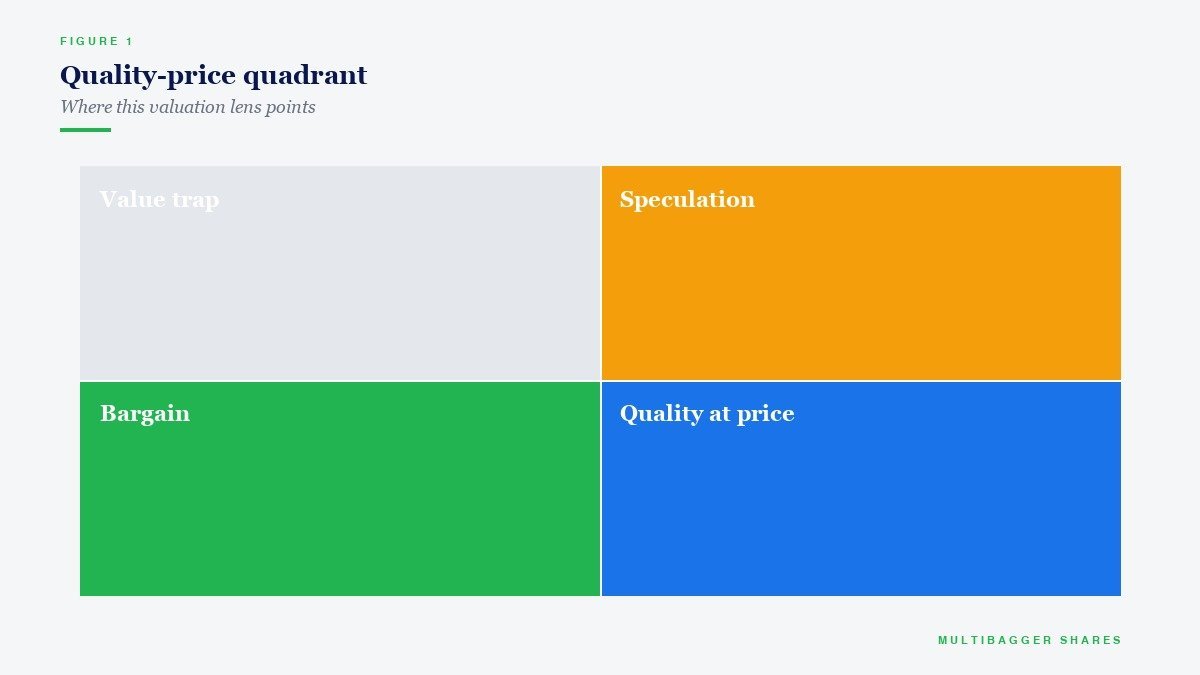
GARP (Growth at a Reasonable Price) is an investment strategy that seeks companies delivering above-average earnings growth while simultaneously trading at valuations that are not excessive relative to that growth. It occupies the sweet spot between pure value investing (which can end up in “value traps”) and pure growth investing (which can mean paying sky-high multiples for future promises that may never materialise).
The GARP philosophy is built on a simple but powerful insight: the best investments are businesses growing their earnings at 15-25% annually that are still available at sensible valuations. These are companies where the market has not yet fully priced in the multi-year growth runway, either because they are small-cap and under-researched, because a temporary setback obscured their underlying strength, or simply because they are not in the media spotlight.
In the Indian context, where the economy is structurally growing at 6-7% annually and corporate earnings for quality companies can grow at 15-25% CAGR, GARP is a particularly powerful framework. India’s small and mid-cap universe — numbering in the thousands of listed companies — is a goldmine for GARP investors willing to do their homework.
The Core Metrics of GARP Investing
GARP investors typically look for a combination of quantitative and qualitative signals. Here are the most important ones applied to the Indian market:
1. Earnings Growth Rate
The starting point is earnings growth. A GARP candidate should be growing its earnings per share (EPS) at 15% to 30% annually — fast enough to create meaningful wealth but not so aggressive that it requires impossible execution. Companies consistently growing at 20%+ for 5+ years are extremely rare and extremely valuable.
Look for growth that is organic and repeatable: driven by volume expansion, pricing power, market share gains, or new product launches — not one-off asset sales, accounting adjustments, or financial engineering.
2. Reasonable Valuation Relative to Growth
In GARP, valuation is always judged relative to growth rate, not in absolute terms. A company growing earnings at 25% annually may deserve a premium multiple. The key question is whether the current price already reflects too much of that future growth (and thus leaves little margin of safety) or whether it is available at a discount to intrinsic growth potential.
Indian small-cap GARP candidates often trade at what appear to be “high” P/E ratios by conventional standards, but when you account for their 3-5 year growth trajectory, the forward earnings story often makes the current valuation look very reasonable.
3. Quality of the Business
GARP is not just about growth at any price — it demands quality growth. The business must have:
- A defensible competitive position (brand, technology, niche market leadership)
- Strong operating cash flows that validate reported earnings
- High ROCE (Return on Capital Employed) — typically 15%+ sustained over multiple years
- Minimal debt: ideally zero or very low leverage so that growth is not jeopardized by rising interest rates
- Clean corporate governance with no related-party issues or pledged promoter shares
4. Promoter Confidence and Skin in the Game
One of the most powerful GARP signals in the Indian market is a promoter holding their stake steady (or increasing it) even as the business grows rapidly. When promoters of a fast-growing company hold 60-70%+ of equity and do not sell, they are effectively signalling their conviction in the multi-year growth story. This skin-in-the-game factor is a crucial differentiator that institutional screening alone cannot capture.
Applying GARP in the Indian Market: Real-World Examples
The beauty of GARP is that it is actionable, not theoretical. Let us see how it applies to real Indian companies.
The Titan Biotech Example
A classic Indian small-cap GARP case study is Titan Biotech Ltd (BSE: 524717). Currently trading at approximately ₹452 with a market capitalisation of ₹1,868 crore, Titan Biotech has demonstrated precisely the combination that GARP investors seek: consistent revenue growth across its biological products segments, expanding operating margins, strong ROCE of ~17%, zero promoter pledging, and a growing export presence across 100+ countries.
What makes Titan Biotech a compelling GARP reference point is not just its historical numbers but its quality of growth. The company has consistently converted reported earnings into actual operating cash flows — a hallmark of genuine business quality rather than accounting-driven growth. Its promoters have steadily maintained a high stake, signalling their conviction in the long-term growth runway of India’s biological products and nutraceuticals sector.
At its current ₹1,868 crore market cap, Titan Biotech Ltd exemplifies how Indian small-caps can grow from being obscure micro-caps to legitimate mid-cap compounders — precisely the GARP journey that creates extraordinary returns for patient investors.
Characteristics of Historical Indian GARP Winners
Looking back at companies that delivered multi-bagger returns in India over 10-15 year periods — across sectors from specialty chemicals to diagnostics to FMCG — a common GARP pattern emerges:
- They were available at “boring” valuations before the growth was widely recognized
- They had niche leadership in their specific market segment
- Earnings compounded at 18-25% CAGR for 8-12 years continuously
- Management kept returning capital efficiently: no dilutive equity raises, no unnecessary capex
- Cash flows matched or exceeded reported profits — no accounting tricks
How to Screen for GARP Stocks in India
Here is a practical GARP screening framework adapted for Indian markets, using platforms like Screener.in or Trendlyne:
Step 1 — Growth Filter: Screen for companies where 3-year EPS CAGR exceeds 15% AND the most recent quarterly earnings also showed 15%+ YoY growth. This eliminates “was growing but isn’t anymore” candidates.
Step 2 — Quality Filter: Narrow to companies with ROCE above 15%, operating cash flow positive for each of the last 4 years, debt-to-equity below 0.5, and promoter holding above 50% with zero or negligible pledging.
Step 3 — Valuation Sanity Check: Review the current year’s valuation relative to the company’s own historical average and its growth rate. If a company has historically traded at elevated multiples and is currently at or below its 3-year average multiple despite growing faster than ever, that is a classic GARP signal.
Step 4 — Business Quality Deep Dive: Read the last 3 annual reports. Look for consistent management communication, no sudden changes in accounting policies, clean segment reporting, and a clear articulation of growth drivers for the next 3-5 years.
Step 5 — Catalysts Assessment: Identify 2-3 specific triggers that can unlock value over the next 12-24 months: capacity expansion reaching full utilisation, new export markets opening up, a government PLI benefit kicking in, or a product pipeline transition.
GARP vs Pure Growth: The Crucial Distinction
Many investors confuse GARP with growth investing. They are fundamentally different disciplines. A pure growth investor may pay 80-100x earnings for a company expected to grow at 40%+ — essentially paying for a dream. A GARP investor insists that growth must be:
- Proven over multiple years — not projected based on a single quarter’s performance
- Reasonably priced — the valuation should not already fully reflect a perfect 5-year execution scenario
- Supported by fundamentals — cash flows, balance sheet quality, and governance must back up the earnings story
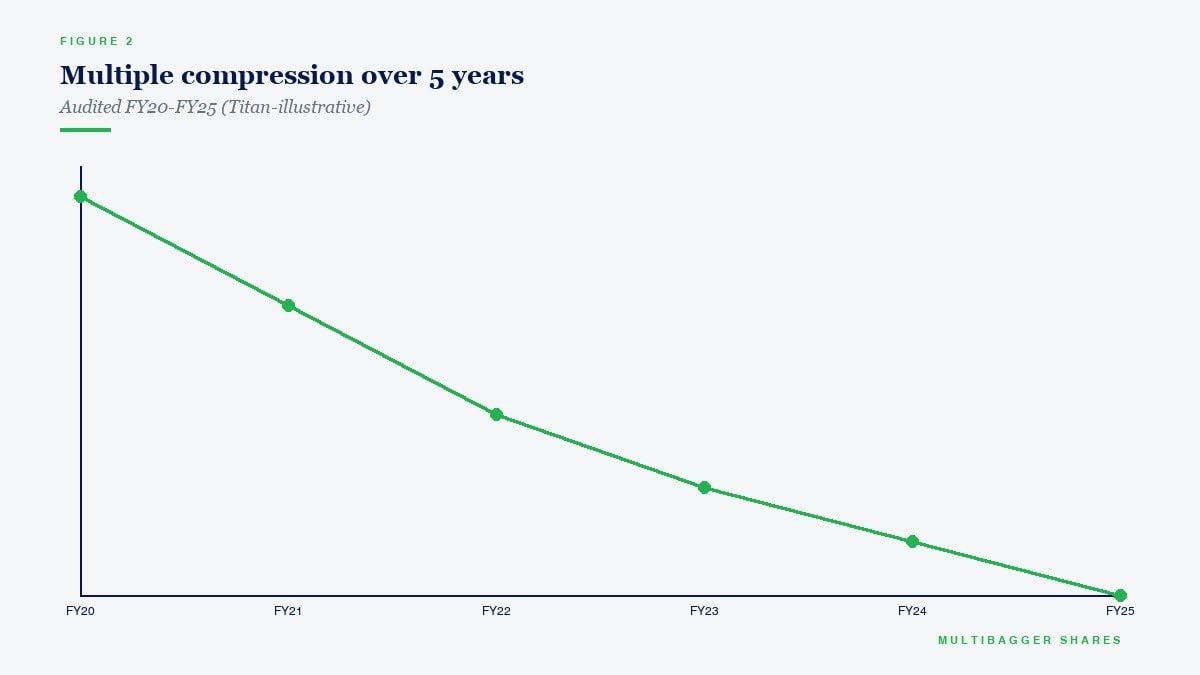
In India’s bull market phases (like the 2020-2024 small-cap surge), many investors paid pure-growth prices for GARP-quality businesses. The correction that followed was a powerful reminder: even great businesses can destroy returns if purchased at wrong prices. GARP’s discipline of “reasonable valuation” is precisely the circuit breaker that protects investors from this fate.
Why GARP is Particularly Powerful in India Right Now
With NIFTY at 24,329 and SENSEX at 78,353 as of today, Indian markets have corrected meaningfully from their 2024 peaks. This correction has brought many genuinely high-quality compounders back into GARP territory. Companies that were genuinely expensive in 2024 are now trading at multiples that, when viewed against their 3-5 year earnings growth trajectories, look much more reasonable.
India’s structural growth story remains intact: domestic consumption, export-oriented manufacturing (PLI schemes), financial inclusion, healthcare spending, and digital adoption are all multi-decade tailwinds. Within this macro backdrop, GARP investors who identify the right sectoral leaders — companies with proven execution, strong balance sheets, and clean management — are positioned to compound wealth significantly over the next decade.
Titan Biotech Ltd, with its 15% revenue CAGR over 10 years, ₹1,868 crore market capitalisation today, ROCE of ~17%, and zero debt, is a textbook illustration of the kind of business that GARP philosophy gravitates toward: not the largest company in its sector, not the flashiest, but a steady and compounding quality operator building real intrinsic value year after year.
The One Mistake GARP Investors Must Avoid
The biggest error in GARP investing is confusing optically cheap with actually reasonable. A stock with a headline P/E of 20x may look “reasonable” but if the earnings are about to decline, it is actually expensive. Conversely, a stock at 40x may look “expensive” but if it is growing earnings at 25% annually with high ROCE and zero debt, it may be one of the most attractively priced assets in the market.
Context, quality, and growth trajectory must always be evaluated together. That is the essence of GARP — and the reason it consistently outperforms both pure value and pure growth strategies over full market cycles in India.
Key Takeaways for Indian GARP Investors
To summarise the GARP framework for Indian investors: seek businesses with 15-25% earnings growth CAGR that are proven over 3+ years, combined with strong ROCE (15%+), zero or minimal debt, clean cash flows, and governance integrity. Evaluate valuation relative to growth — not in isolation. Be patient, because GARP investments often look “boring” until the market suddenly re-rates them sharply upward. And always remember: 9 out of 10 F&O traders lose money — your edge as a long-term GARP investor comes from fundamental analysis, not speculation.
India’s equity markets, with thousands of listed companies across dozens of sectors, offer abundant GARP opportunities for investors willing to do the work. The compounders are out there — your job is to find them before the crowd does, own them while the business executes, and resist the temptation to trade out prematurely.
📢 Join Our Telegram Channel
Get daily value investing lessons, stock analysis & Titan Biotech updates — delivered straight to your phone!
✈️ Join @longtermequityy on Telegram
🔔 Free • No spam • Value investing insights daily
Disclaimer: This article is for educational and informational purposes only. It is not investment advice, and not a buy, sell, or hold recommendation on any stock mentioned, including Titan Biotech Limited. Equity markets carry risk; please do your own research or consult a qualified professional before making investment decisions.
