April 06, 2026
(Monday)
Introduction: The Silent Wealth Destroyer Hiding in Plain Sight
What if I told you there’s a single line item buried deep inside annual reports that has destroyed more retail investor wealth in India than any market crash, any scam, or any global recession? It’s called pledged shares — and most investors don’t even know what it means until it’s too late.
As of today, April 6, 2026, with the Sensex at 73,320 and the Nifty 50 at 22,968, Indian markets are in a recovery phase after weeks of volatility driven by geopolitical tensions. In environments like this, stocks with high promoter pledge ratios become ticking time bombs — and understanding this red flag can be the difference between building a multibagger portfolio and watching your capital vanish overnight.
What Are Pledged Shares? A Simple Explanation
When a company’s promoter (the founder or controlling shareholder) needs money — for personal use, for another business, or to fund the company itself — they can use their shares as collateral to borrow from banks or NBFCs. This is called pledging. Think of it like taking a loan against your gold jewellery at a bank. The promoter still “owns” the shares, but the lender has a lien on them.
The critical difference between pledging gold and pledging shares is this: gold doesn’t lose 40% of its value in a single week. Stocks can. And when they do, the entire pledge arrangement unravels — often catastrophically — taking retail investors’ wealth with it.
How the Pledge Death Spiral Works: A Step-by-Step Breakdown
Here’s exactly how pledged shares destroy shareholder value — a pattern that has repeated dozens of times in Indian markets:
Step 1: The Promoter Pledges Shares. The promoter borrows ₹100 crore from a bank by pledging shares worth ₹150 crore as collateral. The bank maintains a “loan-to-value” (LTV) ratio — typically 50-60%. Everything seems fine.
Step 2: The Stock Price Falls. Due to market correction, sector weakness, or company-specific news, the stock price drops 25%. Those pledged shares worth ₹150 crore are now worth only ₹112.5 crore. The LTV ratio has breached the bank’s comfort zone.
Step 3: The Margin Call. The bank issues a margin call — the promoter must either deposit additional collateral, partially repay the loan, or pledge MORE shares. If the promoter had cash, they wouldn’t have pledged in the first place. So they usually pledge more shares.
Step 4: The Invocation. If the promoter can’t meet the margin call, the bank invokes the pledge — meaning it sells the pledged shares in the open market to recover its loan. This creates massive selling pressure on the stock.
Step 5: The Death Spiral. The bank’s forced selling pushes the stock price down further. Other pledged tranches now also breach LTV limits. More margin calls. More forced selling. The stock enters a death spiral — falling 50%, 60%, 70% or more in days. Retail investors who had no idea about the pledge are wiped out.
Real Indian Market Disasters Caused by Pledged Shares
Zee Entertainment (2019): Subhash Chandra’s Essel Group had pledged a staggering 60%+ of their Zee Entertainment shares. When the market corrected in late 2018-2019, banks invoked the pledges. Zee’s stock collapsed from ₹500+ to under ₹200 in weeks. Thousands of retail investors who thought they owned a “blue-chip media company” were devastated. The promoter ultimately lost control of the company he founded.
Sadbhav Engineering (2019-2020): The promoters of this infrastructure company had pledged over 70% of their holdings. When infrastructure stocks faced headwinds, the pledge invocations triggered a cascade. The stock fell from ₹300 to below ₹50 — an 83% wealth destruction. Investors who checked pledging data before investing would have stayed away entirely.
Future Group (2020-2022): Kishore Biyani’s Future Group had massive promoter pledging across group companies — Future Retail, Future Enterprises, Future Consumer. When COVID hit and the retail business collapsed, the pledge invocations were catastrophic. Future Retail went from ₹400+ to being delisted. Every single retail investor in Future Group companies lost nearly everything.
Ruchi Soya (Pre-Patanjali Acquisition): Before Baba Ramdev’s Patanjali acquired Ruchi Soya through the insolvency process, the original promoters had pledged massive portions of their holdings. When commodity prices moved against them and lenders invoked pledges, the stock collapsed and the company went into NCLT. Original shareholders were nearly wiped out.
The Numbers That Should Terrify You
According to data compiled from BSE filings, as of March 2026, there are still over 150 listed Indian companies where promoters have pledged more than 50% of their holdings. Some companies have promoter pledge ratios of 80%, 90%, even 99%. These are essentially companies where the promoter doesn’t truly “own” their shares — the banks do. And at the first sign of trouble, those banks will dump the shares on the open market without a moment’s hesitation.
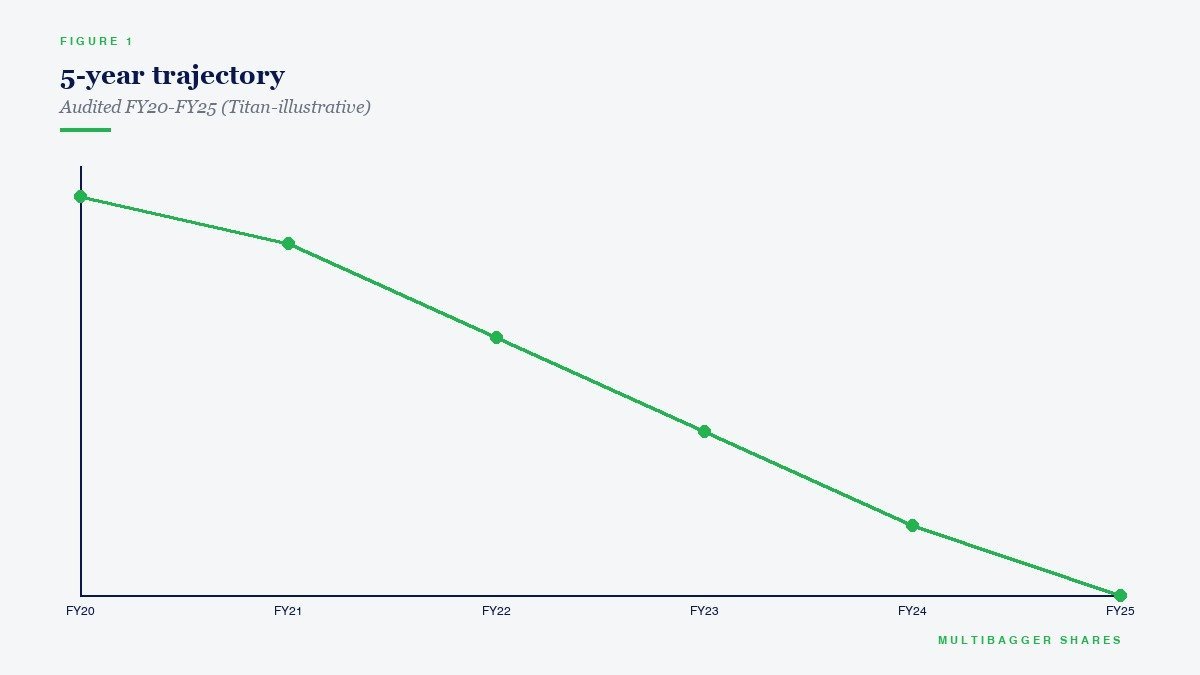
A study by a leading Indian brokerage found that stocks with promoter pledge ratios above 50% underperformed the Nifty by 15-25% annually on average over a 5-year period. The reason is simple: high pledging signals financial stress, poor capital allocation, and governance risk — all of which are wealth destroyers.
The 5 Warning Levels of Promoter Pledging
Level 1: Zero Pledging (0%) — The Gold Standard. The promoter has not pledged a single share. This signals financial strength, confidence in the business, and alignment with minority shareholders. Companies like Titan Biotech (BSE: 524717), currently trading at approximately ₹529 with a market cap of ₹2,187 Crores, maintain zero promoter pledging. In fact, Titan Biotech’s promoters have been increasing their stake — from 48% to 55.87% — which is the opposite of pledging. When promoters are buying (not pledging), it signals deep conviction. Combined with Titan Biotech’s ROCE of 16.9%, ROE of 15.0%, and near-zero debt (D/E ratio of 0.02x), this represents the kind of quality business where promoter behaviour aligns perfectly with shareholder value creation.
Level 2: Low Pledging (1-20%) — Proceed with Caution. Some pledging can be benign — temporary bridge financing, margin for a rights issue, or collateral for a new capex project. If the company is profitable, growing, and the pledge ratio is declining over time, this may be acceptable. But monitor quarterly.
Level 3: Moderate Pledging (20-50%) — Elevated Risk. At this level, the promoter is significantly leveraged against their own stock. A 30-40% market correction could trigger margin calls. Ask yourself: if the promoter had to pledge this much, what does that say about their access to other funding sources? This is a yellow flag.
Level 4: High Pledging (50-75%) — Danger Zone. The promoter is essentially running on borrowed time. Any meaningful stock price decline will trigger invocations. Avoid these stocks regardless of how “cheap” the valuation looks. The “cheapness” IS the pledge risk being priced in.
Level 5: Extreme Pledging (75%+) — Stay Far Away. The promoter has effectively lost economic control. The real decision-makers are the lending banks, not the board of directors. These stocks are one bad quarter away from a death spiral. No valuation is low enough to justify this risk.
How to Check Promoter Pledging: Your Step-by-Step Guide
Method 1: BSE/NSE Shareholding Pattern. Every listed company must disclose shareholding patterns quarterly. Go to the BSE India website (bseindia.com), search for the company, and look at the “Shareholding Pattern” under corporate filings. The promoter section will show “Shares Pledged / Encumbered” with both the number of shares and the percentage.
Method 2: Screener.in. On Screener.in, the shareholding section for each company shows promoter pledging data. This is the fastest way to check. Our own analysis of Titan Biotech on Screener (BSE code 524717) confirms zero pledging — exactly what we look for.
Method 3: Annual Report. The annual report contains the most detailed pledging disclosure. Check the “Promoters and Promoter Group” table in the shareholding pattern section. Also read the notes — they sometimes disclose the purpose of pledging and the timeline for release.
Method 4: SEBI’s SCORES Database. For historical complaints or regulatory actions related to pledge invocations, SEBI’s SCORES database can provide additional context.
The 7-Point Pledge Safety Checklist for Every Stock You Own
Before you buy any stock — or if you’re reviewing your existing portfolio tonight — run through this checklist:
1. What is the current promoter pledge percentage? If above 50%, stop. Don’t proceed. No further analysis needed.
2. Is the pledge ratio increasing or decreasing over the last 4 quarters? Increasing pledge = deteriorating situation. Decreasing pledge = promoter is deleveraging (positive).
3. Why did the promoter pledge? Read the annual report notes. “For business expansion” is less alarming than “for personal use” or “for group company guarantees.”
4. What is the company’s standalone financial health? A profitable, cash-generating company with low debt can survive pledge stress better than a leveraged, loss-making one.
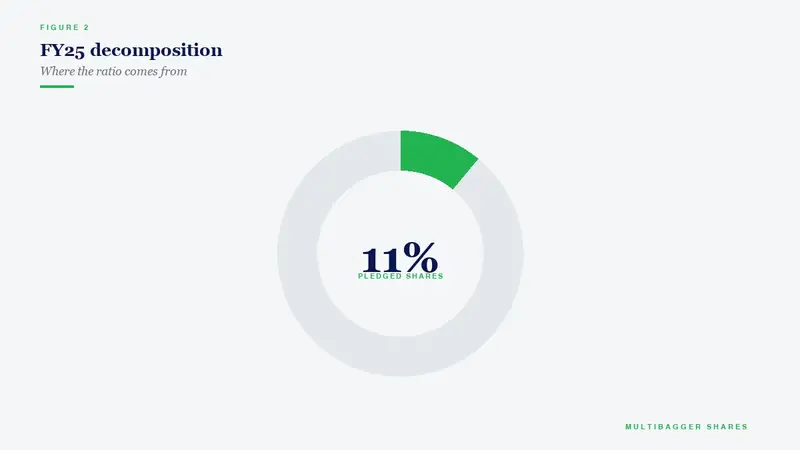
5. Is there a pledge release roadmap? Some companies disclose a plan to release pledges over time. This is a positive sign.
6. How diversified is the promoter’s personal wealth? If the company’s stock is the promoter’s ONLY significant asset, pledging is more dangerous because they have no other collateral to offer if called.
7. Has the stock already fallen significantly? If a highly pledged stock has already fallen 40-50%, the death spiral may be imminent. Don’t try to catch the falling knife.
Why This Matters for Your Portfolio Philosophy
At Multibagger Shares, we advocate for a concentrated portfolio of deeply researched, high-conviction stocks. As Warren Buffett wisely said: “Wide diversification is only required when investors do not understand what they are doing.” When you concentrate your capital in your best 5-10 ideas, each position matters enormously. You cannot afford to have even ONE position with hidden pledge risk.
This is precisely why deep fundamental research — using our comprehensive 95-factor quality framework — matters more than diversification. When you truly understand a business’s promoter behaviour, governance quality, financial strength, and growth trajectory, you can invest with conviction. And checking promoter pledging is one of the most critical of those 95 factors.
The SEBI Data That Puts This in Perspective
According to SEBI’s own study, 9 out of 10 individual traders in the equity Futures & Options segment incurred net losses. Many of these losses come from people gambling on highly pledged stocks that look “cheap” on the surface — not realising that the cheapness is a trap. F&O trading on such stocks is doubly dangerous because leverage on top of pledge risk creates explosive losses. Focus on quality stock picking and long-term value investing instead.
Conclusion: The Best Defence Is a Simple Question
Every time you evaluate a stock — before you look at the P/E ratio, before you check revenue growth, before you read broker reports — ask this one simple question: “What percentage of promoter shares are pledged?”
If the answer is zero, you’re starting from a position of strength. If it’s above 50%, close the tab and move on. There are over 5,000 listed companies in India. You don’t need to take unnecessary risks with pledged stocks when there are hundreds of quality businesses with clean promoter holdings waiting to be discovered.
The greatest wealth in Indian markets has been created by businesses where promoters have skin in the game — where they’re buying more shares, not pledging them to banks. Invest alongside promoters who are building, not borrowing.
Start your value investing education journey today. Watch our free course: Value Investing Course Playlist.
📢 Join Our Telegram Channel
Get daily value investing lessons, stock analysis & Titan Biotech updates — delivered straight to your phone!
✈️ Join @longtermequityy on Telegram
🔔 Free • No spam • Value investing insights daily
Disclaimer: This article is for educational and informational purposes only. It is not investment advice, and not a buy, sell, or hold recommendation on any stock mentioned, including Titan Biotech Limited. Equity markets carry risk; please do your own research or consult a qualified professional before making investment decisions.
