Hazoor Multiprojects Ltd
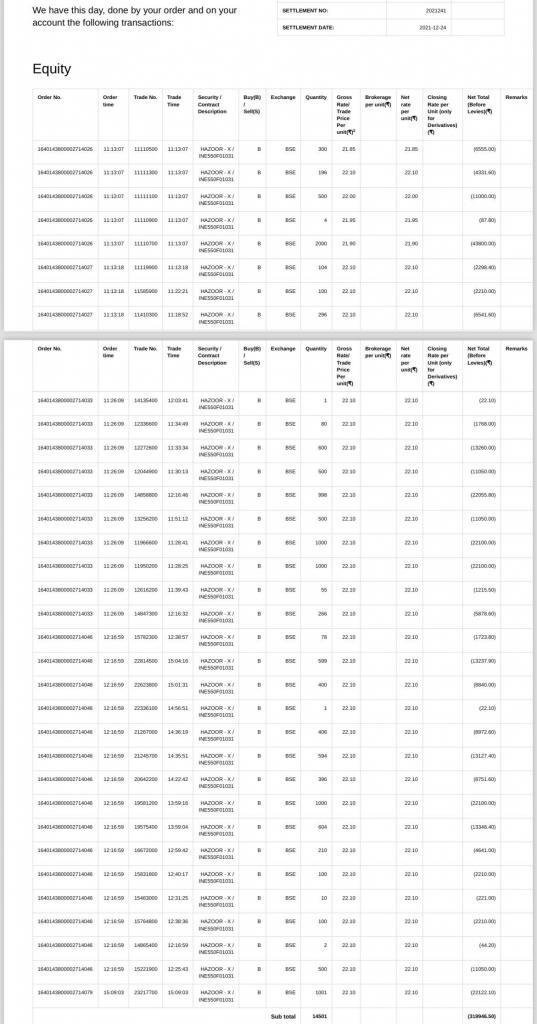
In December 2021 I bought Hazoor Multiprojects at just ₹22 a share — 14,501 shares, a real ₹3.2 lakh purchase you can see in the contract note above. The stock later split 10-for-1, and on a split-adjusted basis my entry has multiplied roughly 10 times. Here is why I bought an obscure infrastructure micro-cap that almost nobody was watching.
A small contractor on a big national theme
Hazoor Multiprojects is a Maharashtra-based infrastructure contractor that builds national highways for NHAI and MSRDC, working on both straight EPC contracts and annuity-style HAM projects. It was tiny and ignored — but it was plugged directly into the single most reliable government-spending theme in India: roads. Buying a small, cheap contractor riding a multi-year national capex wave is a classic way to turn a modest price into a large outcome.
The fundamental strengths that made me buy
- A rock-bottom entry price. At ₹22 the whole company was valued at a fraction of the highway work it was winning — a classic ignored micro-cap.
- A growing order book. A steady stream of NHAI and MSRDC highway wins gave real, contracted future revenue to execute against.
- Two ways to earn. It runs both EPC (build-and-bill) and HAM (annuity) projects, mixing immediate revenue with longer-term cash flows.
- A national tailwind. India’s sustained, multi-year push on highways means a long runway of work for even a small, hungry contractor.
- Growing profits on a tiny base. By FY26 it was doing ~₹403 crore of revenue — a big number for a company I bought as a ₹22 micro-cap.
Why a small contractor can 10×
The mechanics here are simple and powerful. When a tiny, overlooked contractor starts winning real government orders and executing them, the market re-rates it from “forgotten penny stock” toward “genuine infra play.” A 10-for-1 split then widened ownership further. I want to be candid: this is a cyclical, contract-driven business, not a blue-chip compounder — but bought cheap enough, on a strong enough national theme, it delivered a ~10-fold move.
Don’t take my word for it — it’s on the public record
The proof is above — my actual broker contract note showing 14,501 shares of Hazoor bought around ₹22 on 24 December 2021, and my public Facebook buy call from the same week. Real capital, documented, in real time.
“Buy a small, cheap business plugged into a giant, unavoidable national theme — and let the theme do the compounding.”
The lesson for you
Hazoor is why I watch where the government is committed to spending for a decade. A modest contractor bought cheaply on the back of India’s highway boom didn’t need to be a great business to be a great investment — it just needed a rock-bottom price and a giant tailwind.
Want to catch stocks like these before they move?
Explore how you can work with me — the same value-investing framework that found these winners, now applied for you.
Disclaimer: This article is a personal account of my own past investment decision, shared for educational purposes only. It is not a recommendation to buy or sell this or any stock at current prices. All return figures are calculated to recent market prices and adjusted for stock splits and bonuses; past performance is not a guarantee of future returns. Equity investments are subject to market risks. Please do your own research or consult your financial adviser before investing.
